Personal care is help with the everyday tasks most of us never think about until they become hard. Washing, getting dressed, standing up from a chair, or making a simple meal.
This guide explains what personal care at home covers, what a typical visit looks like, and how a good caregiver helps while protecting your loved one’s dignity and independence.
What personal care covers
Personal care is non-medical, hands-on support with daily living. Every plan is different, but most include some of the following.
- Bathing, showering and washing at the sink
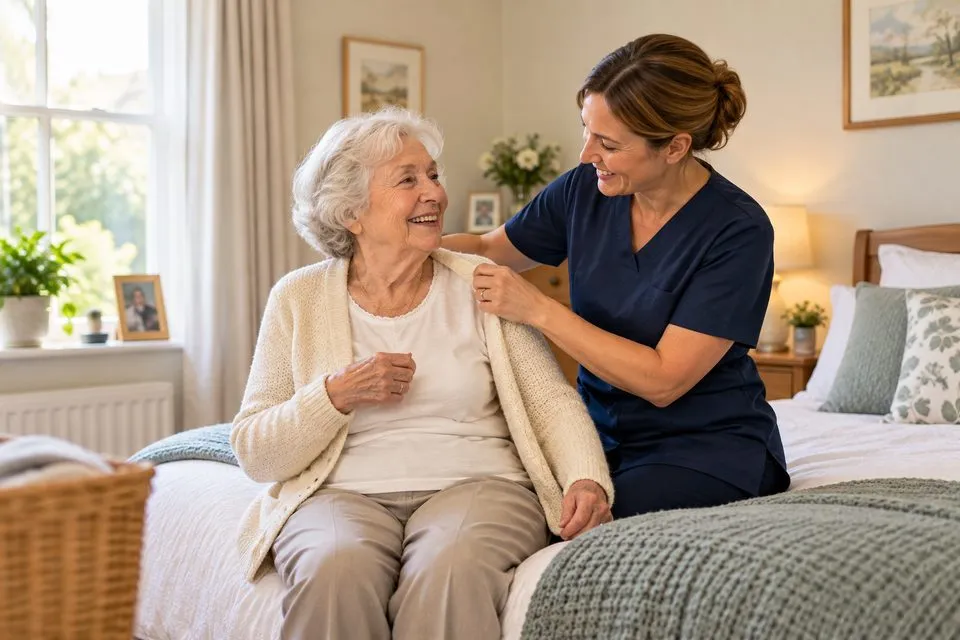
- Dressing, grooming, shaving and hair care
- Getting in and out of bed, chairs and the shower
- Moving safely around the home
- Help with toileting and continence care
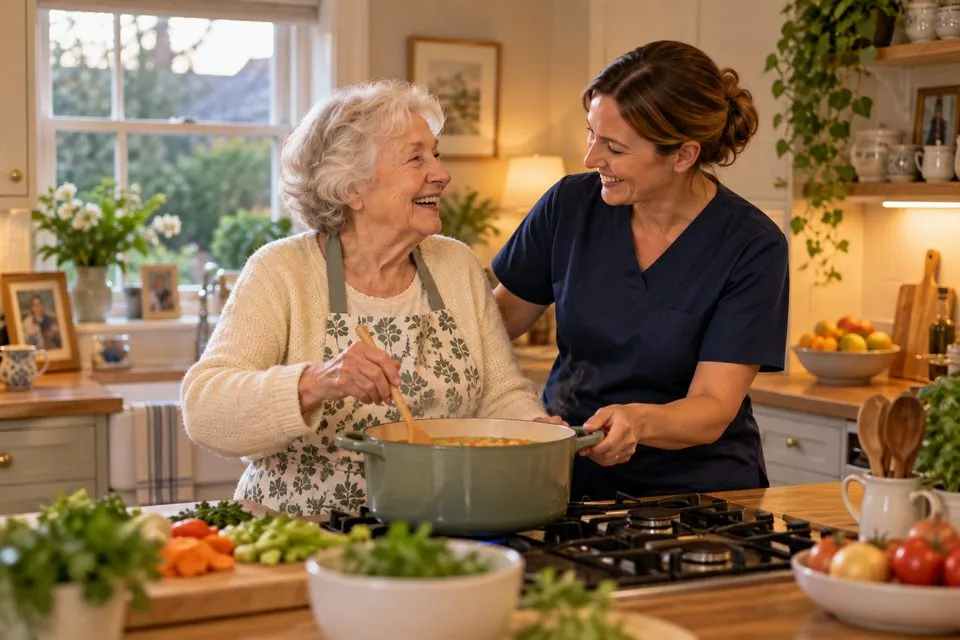
- Preparing meals, and help with eating and drinking
- Reminders to take medication at the right time
What a typical visit looks like
Visits are built around your loved one’s routine, not the other way round. A morning visit, for example, might look like this.
- 1A friendly hello. The caregiver checks how your loved one slept and how they are feeling today.
- 2Washing and dressing at their own pace, with doors closed and towels ready.
- 3Breakfast and a drink, prepared the way they like it, with any medication reminders.
- 4A quick tidy up, and an update for the family if anything has changed.
“Good personal care feels like help from a friend, not a checklist.”
How caregivers protect dignity
Accepting help with something as private as bathing can feel uncomfortable at first. A good caregiver makes it feel ordinary, by:
- Asking before helping, and explaining each step
- Letting your loved one do as much as they can for themselves
- Keeping them covered and warm, with privacy at all times
- Following their preferences, from the soap they like to the time they bathe
How to get started
Most families start with a few visits a week and adjust as they go. These steps make it easier.
- 1Note the tasks that have become hard, and the times of day they happen.
- 2Talk with your loved one about the help they would welcome.
- 3Book a free in-home assessment so we can agree a written care plan together.
- 4Review the plan after the first few weeks, and change it as needs change.
- Personal care is hands-on help with daily living, not medical care.
- Visits follow your loved one’s routine and preferences.
- Good care protects dignity and keeps people as independent as possible.
- You can start small and add more help as needs change.
This article is general information, not medical advice. If you are worried about a loved one’s health, please speak with their doctor.