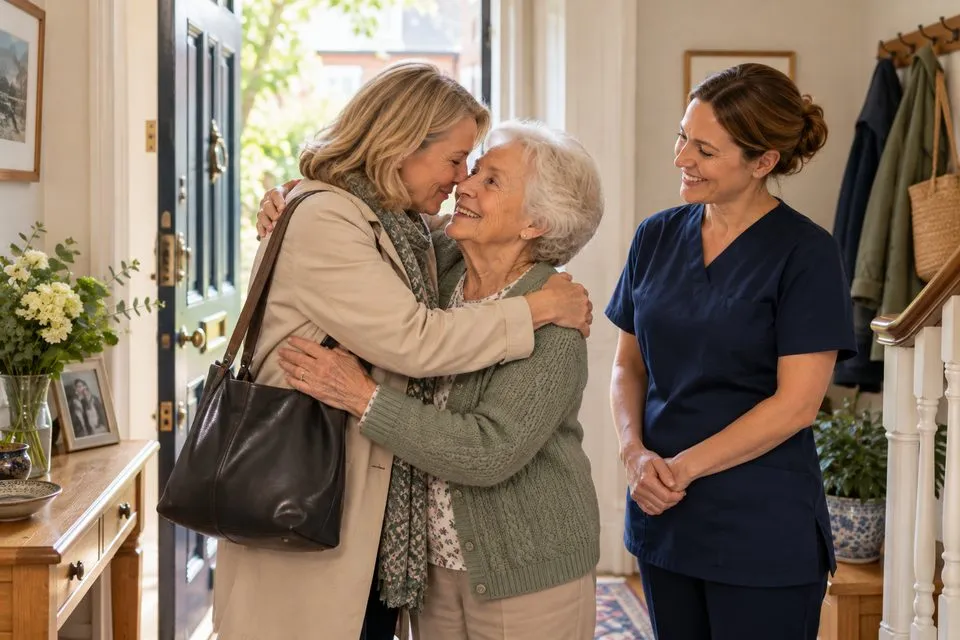
If you are caring for a parent or partner, you may feel you should be able to do it all. But caring without a break wears down even the most devoted people, and that is not good for either of you.
This guide covers the signs of caregiver burnout, why rest matters, and how respite care can give you time to recharge while your loved one stays safe at home.
Signs of caregiver burnout
Burnout builds slowly, so it is easy to miss. You might notice:
- Feeling tired all the time, even after sleep
- Getting irritable or impatient more easily
- Losing interest in things you used to enjoy
- Seeing friends less, or feeling alone
- Getting sick more often, or putting off your own appointments
- Feeling guilty whenever you take time for yourself
Why a break helps you both
Rested caregivers are more patient, notice changes sooner and can keep caring for longer. A short break can be good for your loved one too: a friendly new face, a change of routine, and a chance for you both to recharge.
“Taking a break is part of caring, not a step away from it.”
How respite care works
Respite care is short-term care at home, so you can rest, work, see friends or travel. It can be a few hours, a full day, overnight or longer.
- 1We learn the routine. Meals, medicines, likes and dislikes are written into a care plan.
- 2A caregiver steps in, following the routine your loved one is used to.
- 3You take your break, with updates while you are away if you want them.
- 4A clear handover when you return, so nothing is missed.
Small ways to look after yourself
- Ask family and friends for specific help, like one meal a week
- Book something for yourself and keep it, even a short walk
- Join a caregiver support group, in person or online
- Plan regular breaks, rather than waiting for a crisis
- Burnout is common, and it builds slowly.
- Taking breaks helps you care for longer, with more patience.
- Respite care keeps your loved one’s routine in place while you rest.
- Regular, planned breaks work better than waiting for a crisis.
This article is general information, not medical advice. If you are worried about a loved one’s health, please speak with their doctor.